For a long time, "avatar" was just a profile photo or a gaming skin. It was something you chose once and barely thought about again. Today, that word covers a whole new universe: AI-generated faces that host livestreams, virtual influencers fronting luxury campaigns, VTubers performing to sold-out crowds, and hyper-real "digital humans" working in customer service, retail and education.
This shift is not just aesthetic. A fast-growing digital avatar industry is beginning to touch marketing, product design, commerce and entertainment all at once. For a design and product studio like Pragmica, avatars are no longer a side gimmick. They are becoming a serious interface layer between brands, systems and people.
In this article, we explore what digital avatars are, where they actually create value, and what it means to design them responsibly.
From Profile Pictures to a Spectrum of Digital Identities
The modern avatar ecosystem stretches across a wide spectrum, from clearly fictional characters to realistic digital copies of real people.
On one side, there are stylized characters and VTubers. These avatars are not pretending to be real humans. They are illustrated or 3D-rendered personas with exaggerated features, wild color palettes and distinct personalities. Born in gaming and anime cultures, they now host livestreams, run channels, collaborate with brands and sell merchandise. Fans attend virtual concerts and offline events for characters that only exist as pixels and voice acting. The emotional attachment is real, even when everyone understands the avatar is fictional.
Moving closer to the center, brands have started to create virtual influencers and brand avatars. Some of these are non-human personas with their own backstory, look and social feeds. Others are stylized representations of real people, such as founders or ambassadors. In both cases, the avatar is managed like a piece of intellectual property: it appears in campaigns, stories and product launches, but it can also show up on websites, inside apps and in interactive experiences. The appeal for brands is obvious. A digital avatar does not have scheduling conflicts, does not get into scandals, and can appear in multiple places and languages at once.
At the most realistic end of the spectrum are digital humans and digital twins. Here the goal is not to look like a cartoon, but to be almost indistinguishable from a real person. High-fidelity 3D models, motion capture and AI-generated voices come together to create virtual sales associates, service representatives and trainers. These avatars greet visitors on websites, guide users through complex flows and appear on in-store screens. In some scenarios they are semi-autonomous, powered by conversational AI; in others they are telepresence shells, controlled live by human staff.
All of these forms – stylized characters, virtual influencers and digital humans – are "digital avatars". The design challenge is not just to make them look good. It is to decide where on this spectrum a particular product or brand should live, and why.

Why Brands Are Investing in Digital Avatars
The first obvious arena for avatars is marketing and entertainment. Virtual influencers now appear in fashion campaigns, music videos and brand collaborations. VTubers host streams for millions of viewers and promote everything from games to financial apps. Because these avatars are fully controlled by their creators, brands can script long story arcs that stretch across platforms and formats. A character can start in a social post, appear in a short film, reappear as a 3D lens, and greet you later on the brand's website – all while maintaining a consistent personality and visual language.
Beyond hype, the business logic is clear. A well-designed avatar can carry a consistent narrative for years. It can change outfits and visual worlds without breaking continuity. It can represent the brand in markets where local regulations, languages or cultural expectations make traditional celebrity marketing complicated. When used with care, it can feel less like an advertisement and more like an ongoing relationship.
The second major arena is commerce and customer experience. Digital humans and avatar-based assistants are gradually entering e-commerce, banking, travel, healthcare and education. Instead of a static FAQ or a generic chat widget, visitors see a person-like presence that greets them, explains options, and walks them through key decisions. For complex products, this can reduce friction and anxiety. A virtual stylist can show outfits on a model that resembles the shopper. A virtual banking agent can explain loan terms or investment options in conversational language while pointing at visual elements on screen.
There is also a workforce aspect. Some companies are experimenting with telepresence avatars where human staff work from home but "inhabit" a robot or digital character inside a store. The avatar becomes a remote body: it waves, speaks and interacts with customers while the real person sits behind a camera and interface somewhere else. One staff member can cover several locations in a day without moving; people with mobility constraints can participate in front-line roles; night shifts in one country can be handled by daytime staff in another.
All of this makes avatars more than a design toy. They are tools for reach, consistency, staffing and sales. But their success is not guaranteed. The mere presence of a digital character does not automatically improve customer experience or conversion. That depends entirely on design decisions.
The Hard Questions Behind Avatar Design
When we work on avatar-driven products at Pragmica, the most important questions are not "Can we make it look cool?" but "What does this change for the person on the other side?" and "Where are the risks?"
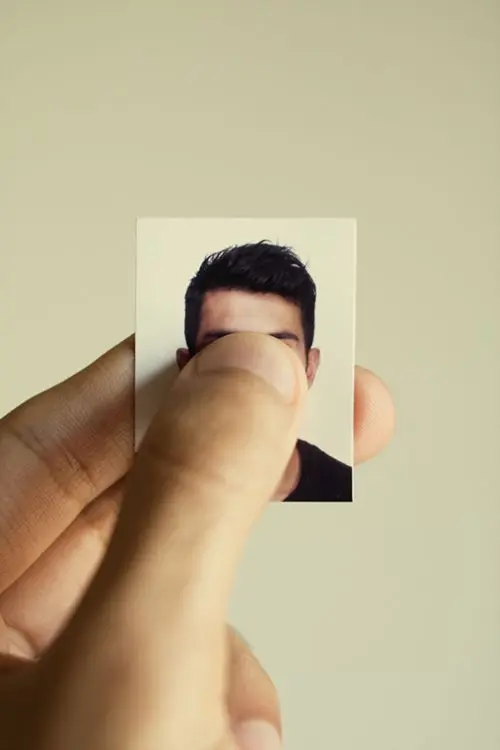
One of the core questions is ownership. If an avatar is modeled after a real person – a founder, a spokesperson, a team member – who controls that likeness? What happens if that person leaves the company or wants to step away from public life? Contracts, consent and expectations need to be clear before any pixels are drawn. Beyond the legal issues, there is a trust issue: audiences increasingly expect to know when an image or persona is synthetic, when it is based on a real face, and when AI is involved.
The second question is realism. Avatars can be clearly stylized, semi-realistic or almost indistinguishable from a human. Each choice has consequences. A stylized character is safe and flexible. It is hard to misinterpret a glowing, cel-shaded creature with purple hair as a real person. That makes it a good fit for entertainment, youth brands and experimental campaigns. A hyper-realistic digital human communicates authority and familiarity, which can help in sectors like finance or healthcare, but it can also trigger the uncanny valley. If the animation is off by just a little, the entire interface feels unsettling.
We tend to favor clarity over illusion. If the entity on screen is not a real human, the interface should make that obvious. Labels, copy and interaction patterns can all contribute: referring to the avatar as an automated assistant, explaining what it can and cannot do, offering obvious ways to escalate to a real person. The more life-like the avatar looks, the more important these cues become.
A third question is function. Once an avatar is embedded in a product, it is no longer just a mascot. It becomes part of the core user experience. That means it must solve real problems: answer questions, guide flows, help people make decisions, or at least make a complex system feel more approachable. A beautiful digital character that blocks navigation, slows down interactions or fails to resolve basic issues will destroy trust much faster than a simple text interface.
Designing for function also means designing for failure. What happens when the avatar does not understand the user? How does it communicate limitations? How does it apologize and recover? Can the user easily switch to another mode – text only, live chat with a human, a phone call? These details matter more than facial shading or clothing textures.
Finally, there is the emotional dimension. Some avatars are intentionally created to be "friends", "companions" or "mentors". We already know from AI chatbots and social robots that people form strong attachments to digital entities, even when they are fully aware they are interacting with software. That can be powerful for engagement, but it also carries responsibility. If an avatar is designed to feel emotionally intimate, teams need to think very carefully about boundaries, especially with younger or vulnerable audiences. It is easy to accidentally create an experience that encourages isolation instead of connection with real people.
Where Digital Avatars Are Heading
Looking a few years ahead, it is unlikely that avatars will disappear. More likely, they will become an invisible part of many products and brands, in the same way mobile design or social media once did.
One clear direction is persistence. Instead of one-off campaign mascots, companies will cultivate long-running avatar identities that live across channels for years. A brand avatar might appear in a launch video one month, act as a virtual host on the website the next, and show up in an AR experience the month after that. Its story, visual evolution and relationships with other characters will become a strategic asset, much like a long-running character in a series or comic universe.
Another direction is convergence. Today, virtual influencers, digital humans and AI agents are often treated as separate topics. In practice, they will start to merge. A single avatar might act as a marketing face on social media, a guide inside a product, and a support assistant inside a help center. The line between "character" and "interface" will blur. That means avatar decisions will affect marketing teams, product teams and operations simultaneously, and will need shared governance instead of being owned by a single department.
Regulation and norms will also move. As synthetic media, deepfakes and AI-generated personas become more common, lawmakers will pay closer attention to consent, disclosure and misuse. We can expect clearer rules around using a person's likeness, labeling synthetic content and protecting minors. There will be debates around whether some types of avatar – for example, synthetic therapists or fake political figures – should be restricted. Brands that invest in transparent, user-respectful practices now will be better positioned than those who chase the most aggressive engagement mechanics.
How Pragmica Approaches Avatar-Driven Products
For us at Pragmica, digital avatars are not just a visual trend. They are a design and systems problem that cuts across branding, interaction design, AI and ethics. When we work on projects that involve avatars, we try to keep a few simple principles at the center.
We prioritize clarity. Users should understand whether they are interacting with a human, an avatar controlled by a human, or an AI-driven agent. We use language, microcopy and visual cues to make this explicit. If the avatar is synthetic, we say so. If a conversation is handed over to a real person, we say that too.
We prioritize function. An avatar that cannot help users achieve their goals is just decorative friction. We always start from concrete scenarios: what decisions should this avatar help with? What questions should it be able to answer? Where must it defer to a human? We prototype flows with and without the avatar to ensure it actually adds value.
We prioritize respect. That means respecting the people whose faces, voices or styles might be involved in creating avatars, and respecting the people who will interact with them. We avoid manipulative patterns that exploit vulnerability or loneliness. We design escape hatches that make it easy to step out of an avatar interaction and into a more neutral or human channel.
We prioritize measurability. Avatars should be judged by their impact on comprehension, conversion, satisfaction and long-term trust, not just by views or likes. In product contexts, we instrument interactions to learn whether the presence of an avatar truly improves the experience. If it does not, we adjust or remove it.
Digital avatars will not replace humans, but they will increasingly mediate how humans meet brands and products. The interesting design challenge is not to make them as "realistic" as possible, but to make them meaningful: characters and agents that genuinely help people, fit the brand's values and behave transparently.
That is the space where Pragmica likes to work: right between aesthetics, engineering and ethics, designing the digital faces that users will meet – and making sure those faces are worth meeting at all.